CPR for All
by MakerLAB · Weill Cornell Medicine · 2026-09-28
CPR for All is a low-cost, digitally fabricated CPR training model for schoolchildren in Pakistan, developed with Weill Cornell Medicine emergency physicians and the Pakistan Life Saver's Program. It gives immediate feedback on chest-compression depth and rate, making CPR training possible where full manikins are out of reach.
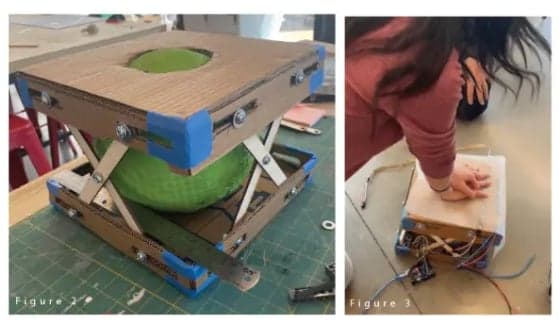
The prototype is a compression box: a top and bottom plate joined by a bolted scissor linkage, with a squishy green ball between them providing the resistance of a chest. Blue corner brackets hold the frame together, and an electronics board with sensors underneath measures how far and how fast the top is pressed.
The photos show two stages: the open frame on the cutting mat (Figure 2) and a closed version being tested with real compressions (Figure 3). "Digitally fabricated" suggests the plates and linkage were cut on a laser cutter from flat stock, which keeps the design cheap to reproduce anywhere with access to one.
Tips: calibrate depth feedback against a real manikin before testing with students, and design the linkage so it bottoms out at a safe maximum depth.
Partner: Weill Cornell Medicine
Tools used
Materials
CardboardBolts and nutsFoam ballMicrocontrollerSensorsJumper wires